Photo: US Air Force, public domain, via Wikimedia Commons
On Monday, November 10, 1969, public television stations across the United States aired the first episode of a new children's show. It opened on a city street with brownstones and a stoop, a man named Gordon showing a little girl around the neighborhood, and a very large yellow bird. The episode was brought to you by the letters W, S and E and by the number 2.
Fifty-seven years later Sesame Street is still on the air. It has outlived the network that first carried it and changed homes more than once. What I find most interesting about it is not the longevity, though. It is that the show began as a research project, and for once on television the research was not an afterthought.
A dinner party and a test pattern
The usual origin story starts in 1966, at a dinner party in New York hosted by Joan Ganz Cooney, a producer of public affairs documentaries. One of her guests was Lloyd Morrisett, a psychologist and an executive at the Carnegie Corporation. Morrisett had noticed his young daughter getting up early and sitting in front of the television test pattern, waiting for something to come on.
The question that came out of that evening was simple enough: if small children were going to watch television anyway, could television teach them something? Cooney spent the following months studying the idea and wrote a report on how TV might be used in preschool education. That report became the basis for the Children's Television Workshop, set up in 1968 with money from the Carnegie Corporation, the Ford Foundation and the federal government.
Testing the show on actual children
The Workshop did something unusual for the time. It hired educators and researchers, led by the Harvard professor Gerald Lesser, to set out a curriculum before the writers got going, and then tested segments on groups of children to see what held their attention.
One method involved showing kids a segment while a slideshow ran on a screen next to the TV. If their eyes drifted to the slides, the segment was losing them. It sounds a bit cruel to the writers (imagine having your sketch beaten by a slide of a bicycle), but it gave the producers something TV almost never had: evidence.
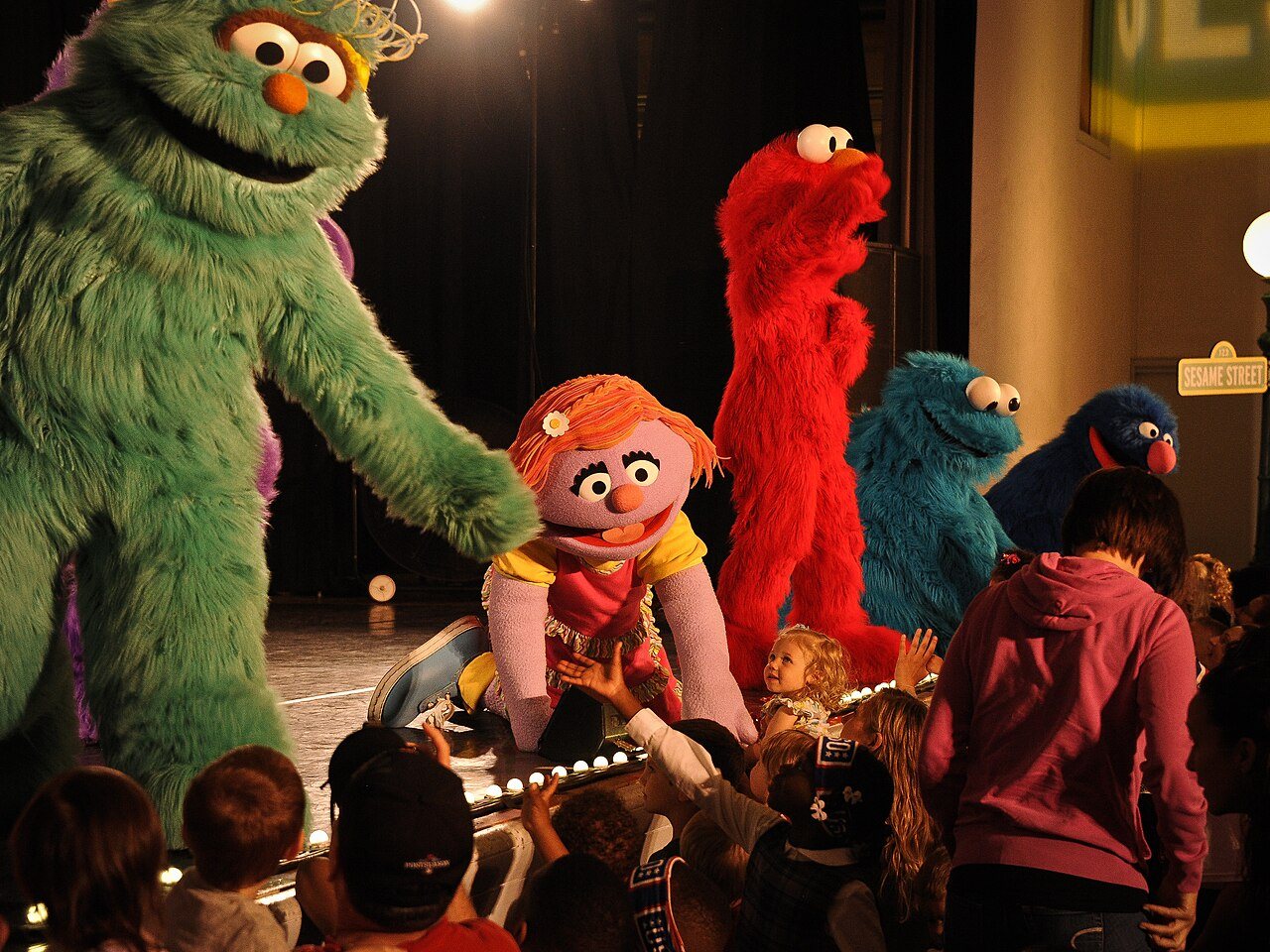
That testing changed the show before it even launched. The researchers had originally wanted the Muppets kept apart from the human scenes on the street, on the theory that children might confuse fantasy and reality. Test episodes in the summer of 1969 showed that kids drifted away during the street scenes with only human actors. So the puppets moved onto the street.
Jim Henson and a bird who lived on the block
Jim Henson was already known for his Muppets from commercials and variety-show spots, and he was brought in to create characters for the series. Once the decision was made to put puppets on the street, two new residents appeared: Big Bird and Oscar the Grouch, both performed by Caroll Spinney, who would stay with them for about five decades.
Kermit the Frog appeared from the first season as well, along with Ernie and Bert and Cookie Monster. The human cast in that first year included Matt Robinson as Gordon, Loretta Long as Susan, Bob McGrath as Bob and Will Lee as Mr. Hooper, the shopkeeper.
The street itself was the point. The producers wanted it to look like a real inner-city block rather than a fairy-tale set, because many of the children they most wanted to reach lived on blocks like it.
The backlash nobody likes to remember
Not everyone welcomed a children's show with an integrated cast. In 1970 the state commission that ran educational television in Mississippi voted to keep Sesame Street off the air there, citing the show's racially mixed neighborhood. The decision drew national coverage and complaints, and it was reversed within weeks.
It is a footnote in most anniversary pieces, and I think it should be more than that. The show's creators made a deliberate choice about who lived on that street, and some people noticed exactly what they were doing.
From public television to HBO and Netflix
For more than four decades Sesame Street was a fixture of public television, first on National Educational Television and then on PBS when it launched in 1970. The Children's Television Workshop later renamed itself Sesame Workshop, and local versions of the show were produced with partners in dozens of countries.
Money was always the tricky part. In 2015 Sesame Workshop made a deal with HBO, which got first-run episodes, while PBS aired them later. That arrangement drew plenty of criticism at the time, mostly from people who did not like the idea of new episodes going to paying subscribers first. In 2025 the show moved again, this time to Netflix, under a deal that has new episodes reaching Netflix and PBS on the same day.
Watching it now, at any age
If you have a small child at home, the current seasons are on Netflix and PBS, and PBS Kids keeps a large library of clips. The show is shorter and faster now than it was in 1969, and the episodes are built around fewer, longer stories.
If you are watching for yourself, the older material is the real treat. Clips from the first seasons are easy to find, and they are slower and odder than you probably remember, with long musical pieces and animated counting films that would never survive a test screening today. Go and find the first episode if you can. It still opens with Gordon walking a little girl down the street, and it still holds up.
Enjoyed this story?Get a new one every day on social.