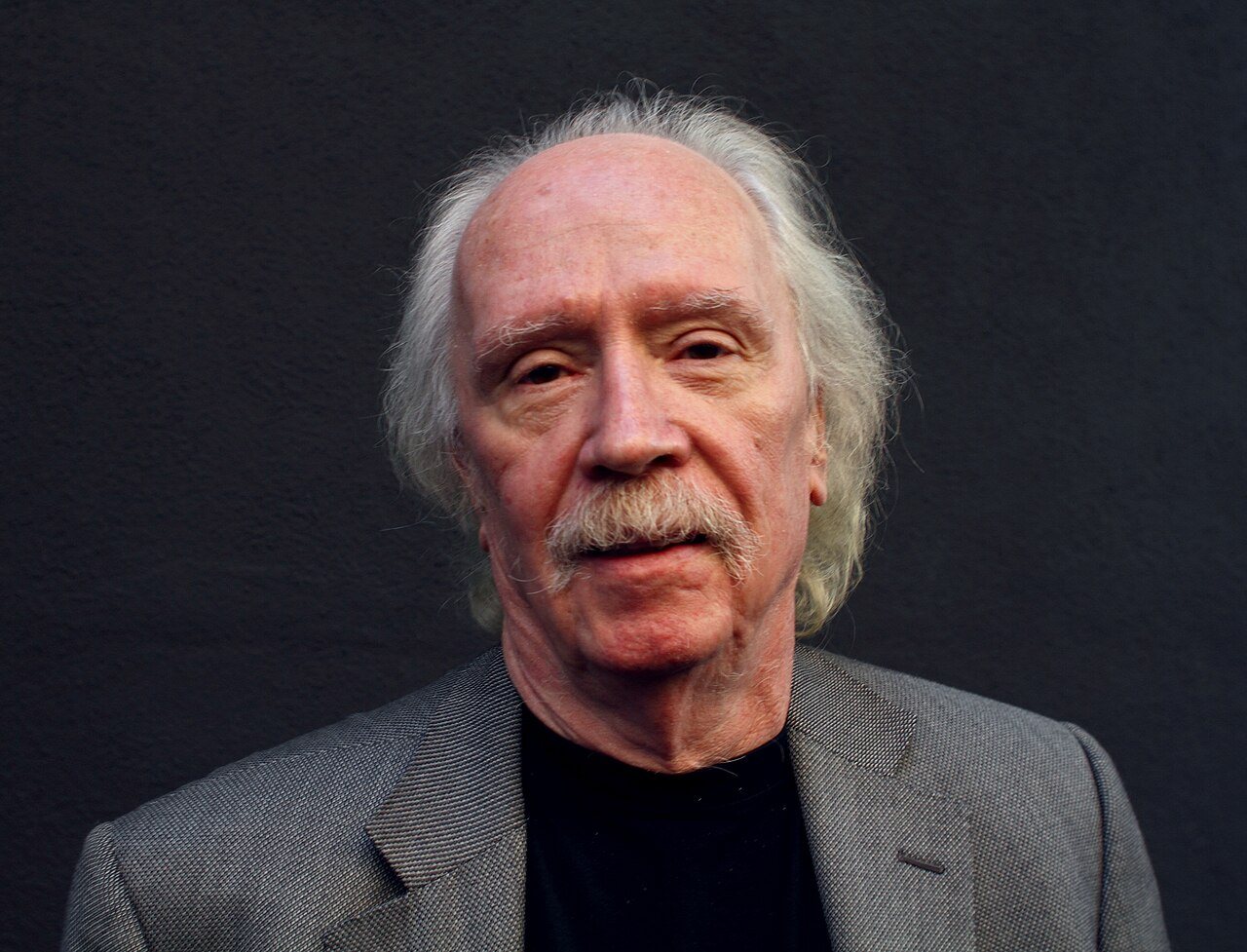
Photo: Nathan Hartley Maas, CC BY-SA 3.0, via Wikimedia Commons
Halloween opened in late October 1978 with almost nothing going for it on paper. No big stars, a director whose last film had barely been released, and a budget usually put at around $300,000, which even then was small change for a feature. The leaves blowing across the lawns of its small Illinois town were fake, and if you look carefully you can spot a palm tree or two.
It became one of the most profitable independent films of its era, made Jamie Lee Curtis a star and gave the movies a villain who is still being rebooted almost half a century later. This week it turns 48, and it holds up better than most films that cost a hundred times as much. (Fair warning: it's my favorite horror film, so take my bias into account.)
The pitch was called The Babysitter Murders
The idea didn't start with John Carpenter. Producer Irwin Yablans wanted a horror film about a killer stalking babysitters, and the working title was The Babysitter Murders. Setting it on Halloween night was his suggestion, and it was a smart one: it gave the film a built-in date and a title nobody else had claimed.
Carpenter wrote the script with Debra Hill, who also produced. They made the town of Haddonfield ordinary on purpose. The point was that this could be anyone's street, and that a quiet suburb with porches and picket fences was scarier than a castle.
Twenty days, fake leaves and a palm tree problem
The film was shot in about twenty days in the spring of 1978, mostly around South Pasadena and Hollywood in California. That created an obvious problem for a story set on October 31 in the Midwest. The crew bought bags of paper leaves, painted them in autumn colors and scattered them for each shot, then gathered them up to use again. It mostly works. The occasional palm tree in the background is the giveaway, and spotting them has become a small fan sport.
Money was tight in every department, and you can feel it in the best way: the film has the plain, slightly underlit look of a real street at dusk rather than a studio set.
The mask was William Shatner's face
The best-known piece of cheap ingenuity is the mask. Production designer Tommy Lee Wallace bought a Captain Kirk mask from a costume shop, widened the eye holes, teased the hair and sprayed the face a flat white. The result looked almost human and almost blank, and that was the effect they wanted. Carpenter's script just called the killer "The Shape," which is how he's credited, and the character's name, Michael Myers, came from a European film distributor Carpenter knew.
Nick Castle, a friend of Carpenter's from film school, played The Shape for most of the film. He later became a director himself and returned under the mask briefly for the 2018 sequel.
Jamie Lee Curtis and Donald Pleasence
Curtis was nineteen and making her film debut as Laurie Strode, the bookish teenager who notices the man in the white mask long before anyone believes her. Her mother was Janet Leigh, the star of Psycho, and the film nods to that connection: Donald Pleasence's psychiatrist, Dr. Sam Loomis, shares his name with a character in Psycho.
Pleasence was the one real name in the cast, a veteran British actor who brought gravity to lines that could have sounded silly. Most of his scenes involve warning people who won't listen, and he makes that oddly gripping.
A score in five-four time
Carpenter also wrote the music, and he did it quickly and cheaply on a synthesizer and piano. The main theme is in an unusual 5/4 time signature, which is part of why it feels slightly off balance and hard to shake. Carpenter has told a story about screening an early cut without music for a studio executive who wasn't scared at all. Once the score was added, the film worked. I'm inclined to believe him, because the theme is doing a lot of the heavy lifting in the quieter scenes.
Small release, huge return
Halloween opened on October 25, 1978, in a few cities before spreading across the country through word of mouth over the following months. It went on to earn tens of millions of dollars in North America alone against that tiny budget, and the Library of Congress added it to the National Film Registry in 2006.
Its success also kicked off a wave of imitators. The slasher boom of the early 1980s, with masked killers in summer camps and on suburban streets, follows its template closely, though few copied its patience. Carpenter's camera spends long stretches just watching, and he shows very little blood.
How to watch it this Halloween
The franchise now runs to thirteen films, including several timelines that ignore each other. If you want the original experience, watch the 1978 film on its own first, ideally at night with the lights off. If you then want more, the 2018 film picks up directly from the original and skips every other sequel, with Curtis back as Laurie, and it was followed by Halloween Kills in 2021 and Halloween Ends in 2022.
The original is widely available to stream and rent, though which service carries it changes, so check a streaming guide before you sit down. And when the leaves blow across the screen in that first daylight scene, look for the palm tree.
Enjoyed this story?Get a new one every day on social.