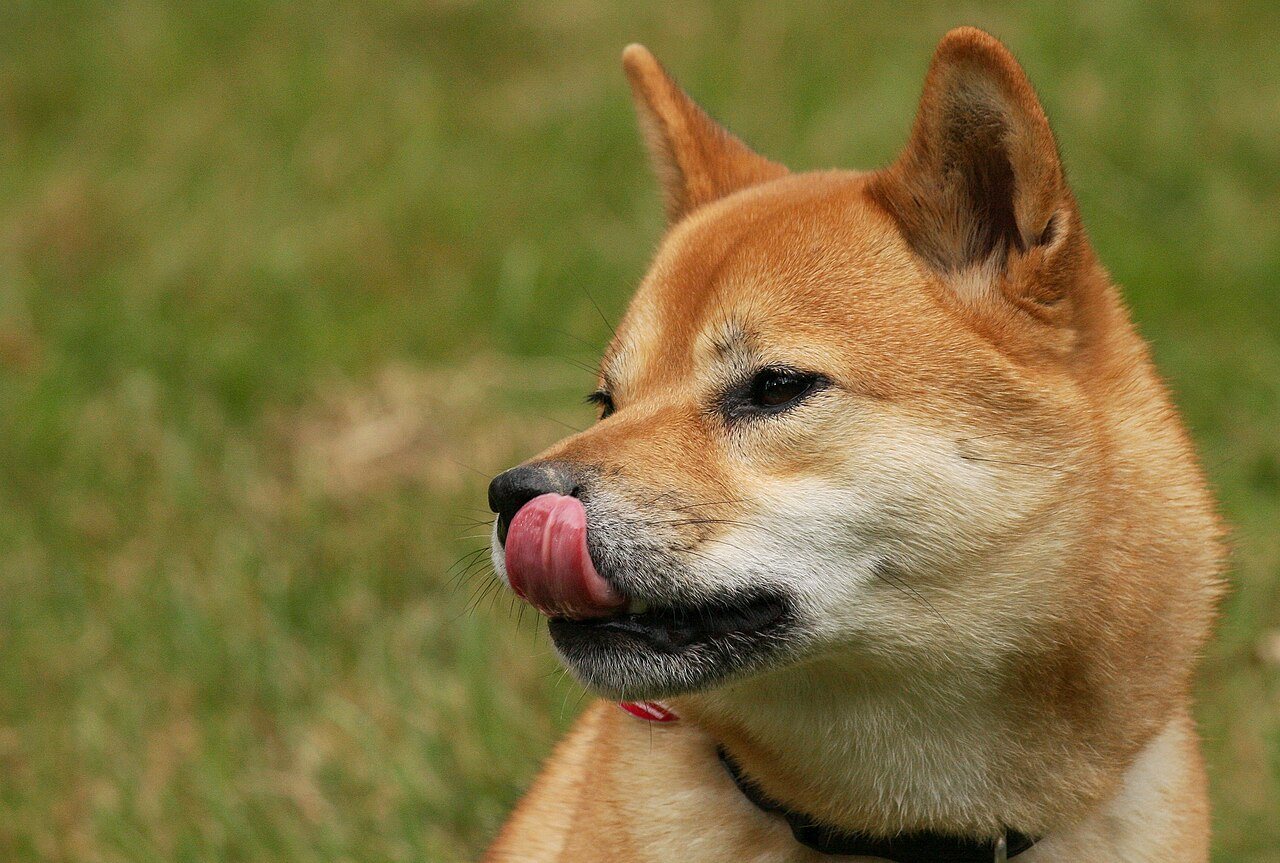
Photo: Maja Dumat, CC BY 2.0, via Wikimedia Commons. A shiba inu of the same breed, not Kabosu.
Yesterday would have been Kabosu's 21st birthday, going by the date her fans still mark. She was a shiba inu from Sakura, Japan, and in February 2010 her owner, a kindergarten teacher, put a photo of her on a personal blog. Kabosu is on a couch, paws crossed, giving the camera a sideways look that suggests she has heard about your plans and has concerns.
That's it. That's the photo. Within a few years it had become one of the most recognized images on the internet, and by the end of 2013 it was the mascot of a cryptocurrency.
I've written a lot of stories about things going viral, and most of them follow the same sad arc: internet finds person, internet ruins person's week. Kabosu's is one of the few where the subject stayed blissfully unaware and got to spend her days being a dog.
A rescue dog named after a citrus fruit
Kabosu wasn't a show dog or a breeder's pride. She was adopted in 2008 from a shelter after the puppy mill she came from closed down, and she was named for the kabosu, a small round Japanese citrus fruit, because her owner thought her face was round.
The blog was the ordinary kind that pet people keep, full of pictures of a dog and some cats living their lives in a quiet city east of Tokyo. Nothing about it was meant for a global audience. The English-speaking internet found the side-eye photo anyway and started passing it around.
Such wow, very Comic Sans
By 2013 the picture had picked up its signature look, and that's when it took off. People overlaid it with little bursts of colored Comic Sans, written in a broken English meant to be the dog's inner monologue. "Such wow." "Very scare." "Much amaze."
The joke worked because it was so low effort, and because the voice was oddly sweet. A dog encountering the world and finding all of it astonishing was a nice change of pace from the usual meanness of 2013 internet humor (I say this as someone who was reading the comments in 2013).
The word itself, "doge," was a deliberate misspelling of dog, and it spread along with the picture. People made doge versions of everything, and the format turned up in ads and news segments, which is usually how you can tell a meme is about to be declared dead.
Then two software engineers made it weirder.
The joke coin that wouldn't stop
On December 6, 2013, Billy Markus and Jackson Palmer launched Dogecoin, a parody of the crypto boom, with Kabosu's face on the logo. They meant it as a joke, and they have said so repeatedly.
The joke got out of hand almost immediately. According to the project's own history, Dogecoin was handling more daily transactions than Bitcoin within two weeks, largely because people on Reddit were using it to tip each other for good posts. Its users also liked doing silly, generous things with it. In early 2014 they raised about 26.5 million DOGE, then worth around $30,000, to help send Jamaica's bobsled team to the Sochi Winter Olympics. A couple of months later they put a similar sum toward clean water wells in Kenya.
Markus and Palmer both left development early on. Palmer in particular has been openly scathing about what crypto became.
Elon Musk, a $4 million NFT and a federal acronym
For a while Dogecoin was just a cheerful relic. Then came 2021, when Elon Musk started posting about it and billed himself as the "Dogefather" around his appearance on Saturday Night Live. The coin, created as a gag, briefly became worth tens of billions of dollars.
That June, an NFT of the original 2010 photo sold for $4 million, to the collective PleasrDAO. Then in 2025 the meme landed in the US federal government, more or less, when the Department of Government Efficiency took the acronym DOGE with an obvious wink. I doubt any kindergarten teacher posting a dog photo in 2010 had that on her bingo card.
What strikes me is how little of this touched the dog herself. She went on napping and going for walks.
A quiet ending in Sakura
Kabosu died on May 24, 2024, at about 18. Her owner announced it on the same blog where it all started, writing that she "quietly passed away as if asleep while I caressed her." Fans responded around the world, and the news coverage was the kind usually reserved for movie stars.
Where you can still see her
The side-eye has a physical home now. Fans funded a bronze statue through an online campaign started on her 17th birthday, and it hit its goal within half a day. It sits in Sakura Furusato Square, next to a Dutch-style windmill, with Kabosu perched on a stone couch in her famous pose and a few bronze cats for company.
If you're in the Tokyo area, it's a much better way to pay tribute than buying a coin named after her. Dogecoin still trades, and it remains a volatile thing that began as a joke, so please don't treat this article as a reason to own any. The statue, on the other hand, has never dropped 40 percent in a week.
Enjoyed this story?Get a new one every day on social.